Carpenter in Eugene, OR: Wood Rot, Structure & Finish Work
Eugene Carpentry is a local residential carpentry shop serving homeowners throughout Eugene, Springfield, Creswell, and the surrounding areas. We work on the full range of carpentry: structural repair of rot, insect damage, and failing framing; beam replacement and load-bearing alterations; and the finish carpentry that makes a house live well, trim, doors, cabinets, stairs, and built-ins. We are not a national franchise dispatched from a call center. The same carpenters do your work, and we know the building stock here: the Craftsman bungalows and Queen Anne cottages of the Westside and Whiteaker, the English cottages and Tudor homes around the university and Fairmount, the post-war ranches and deep-eaved post-and-beam homes climbing the South Hills, and the mid-century split-levels across Bethel and River Road. Many of these houses have settled over a century or more, and the wet Willamette Valley climate keeps wood damp for months at a time.
If you are searching for a carpenter near me in Eugene and need help with wood rot, termite damage, a soft or sloping floor, structural framing, or finish carpentry, call (541) 636-9499 or request a free wood rot inspection to discuss what you have found.
Why Wood Fails in Eugene, and How We Read It
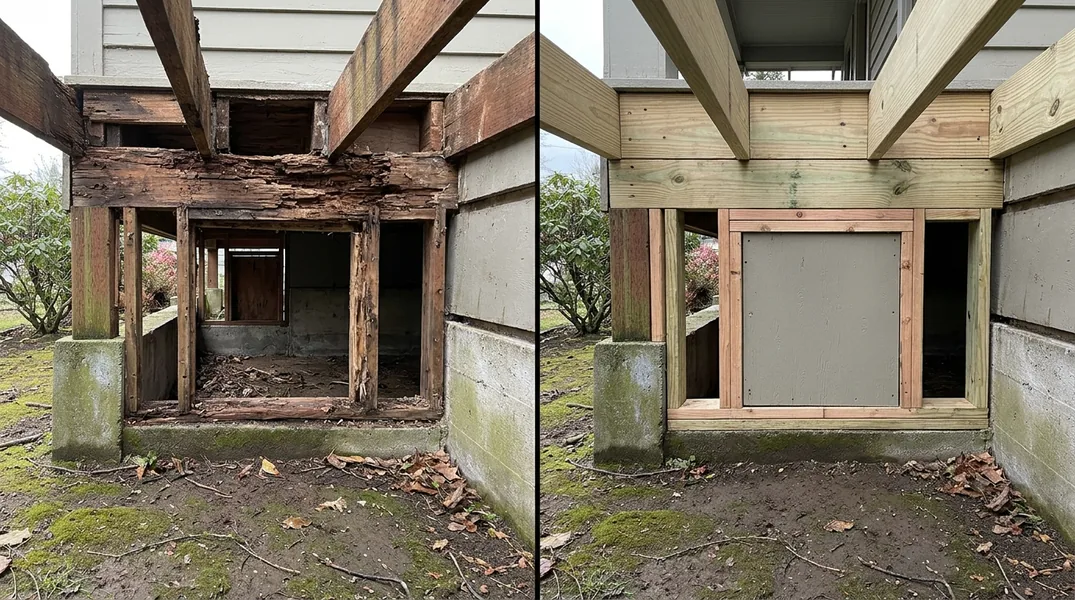
Wood fails here for three clear reasons, and understanding each one helps you know what to do. Dry rot is a fungus that needs sustained moisture, not standing water, but wood that stays damp for months on end. In Eugene, the long rainy season from fall through spring keeps siding, sills, fascia, and deck framing wet enough for the fungus to colonize and soften the wood from inside. Wet rot settles into places where water actually collects: window sills, door thresholds, the ledger board where a deck bolts to the house, and the sill plate and joist ends that rest on the rim of a crawlspace. Termites and wood-boring beetles work differently. Pacific dampwood termites and carpenter ants tunnel through the wood and hollow it out from within while the paint film on the surface still looks intact. You can probe the wood with a screwdriver or awl and find that it is soft or crumbly inside, even though nothing looks wrong from across the room.
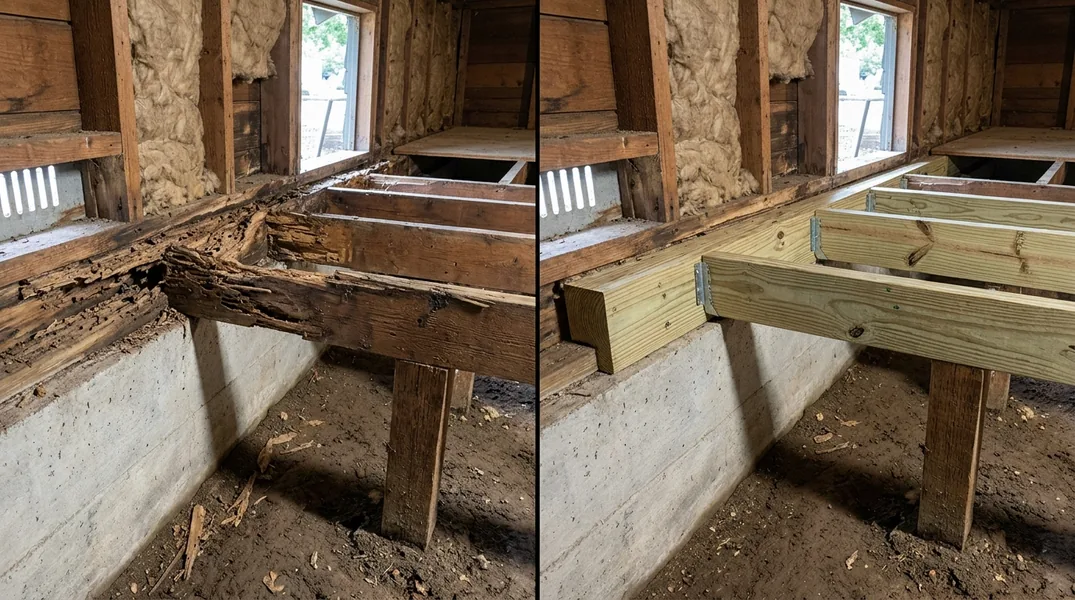
The honest way to assess rot or insect damage is to look at what is actually there. We probe to find where the sound wood begins, we check the framing behind the visible surface to understand how deep the damage runs, and we trace back to the water path that fed it in the first place. A member with cosmetic surface decay but sound wood underneath can have the bad section cut out and rebuilt with new wood. A member that has lost too much section, where the remaining sound wood cannot carry its load, gets replaced. And if the water source is not closed, the repair fails again in a few years. Filler over rot is not a repair; it is a delay. If you have had a pest inspection and discovered termite or insect damage, we repair and replace the damaged wood working from your inspection report.
The best way to know what you are dealing with is to have a carpenter look at it. Call (541) 636-9499 or request a free wood rot inspection, and we will help you understand what has happened and what repair or replacement will cost. If you are facing wood rot or dry rot repair or termite damage repair, we can quote both options when both are real.
Structural Carpentry in Eugene: Joists, Beams and Settling
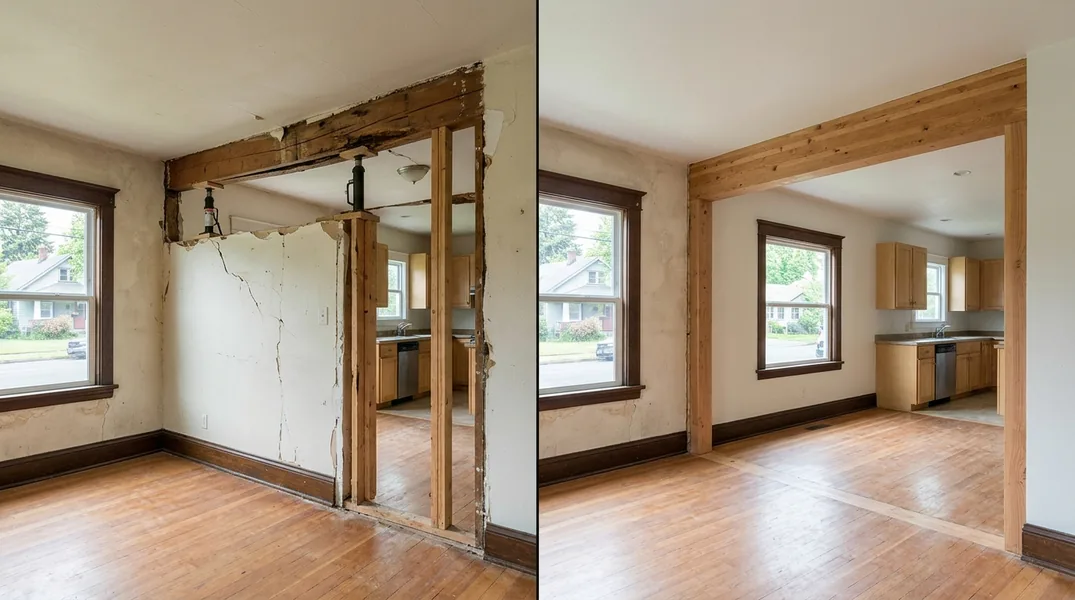
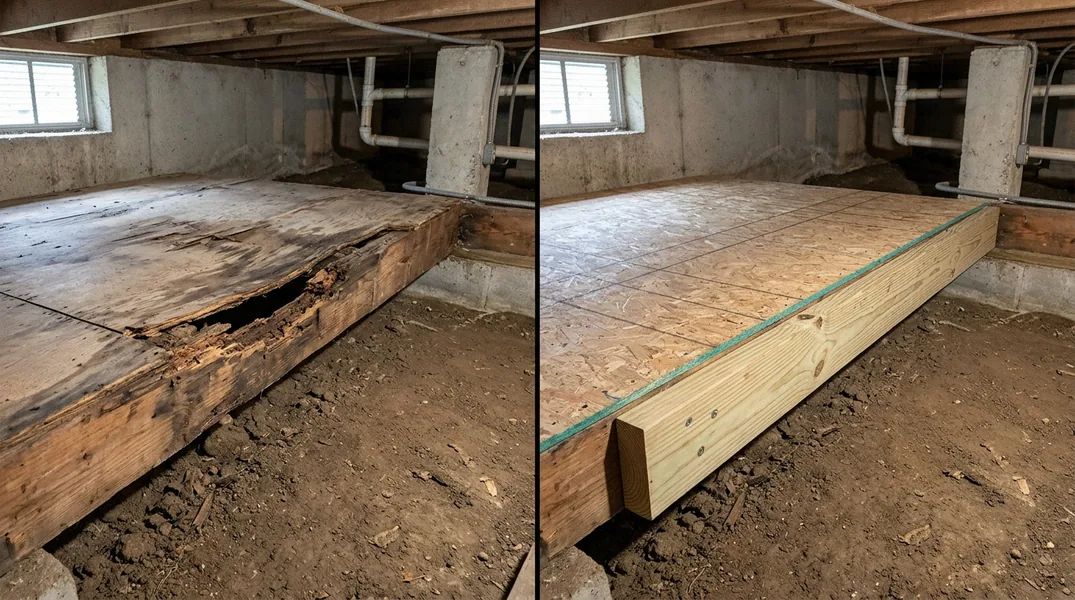
Structural carpentry in an old Eugene house usually means one of three things: repairing or replacing a floor joist or subfloor section that has failed, fixing a sill plate or rim joist that has rotted at the crawlspace, or altering the frame to open up a room or add support where a wall needs to move. A soft or bouncy floor often means that one or more joists have weakened from rot or insect damage, or that the subfloor has delaminated. Sometimes sistering a new joist alongside the old one is enough; sometimes a section gets replaced. A sill plate that has rotted where it meets the rim loses its bearing and lets the floor settle. The settled floor and sticking doors you see in a century-old Craftsman bungalow are usually the normal condition after a hundred years of gradual settling, not a sign of active failure. What matters is whether a member is still moving, and whether it is still sound where it bears weight. We assess that by looking at the wood, checking for ongoing moisture or movement, and understanding what load it carries.
Beam replacement and load-bearing wall removal are structural alterations that commonly require engineered drawings and a permit from the local building department. Beam sizing and load calculations require the work of a licensed structural engineer, not a carpenter. We build to engineered drawings rather than produce them, and we will tell you plainly if your project needs that step. Floor joist and subfloor repair often does not, but beam replacement and load-bearing wall removal almost always does. Requirements vary by jurisdiction, so verify with the Eugene building department before you commit to a design.
Finish Carpentry and Built-Ins in Eugene Homes
Finish carpentry is where a house becomes a home. Casing around doors and windows, baseboard along the floor, crown molding at the ceiling, wainscoting on a wall, custom shelving and built-ins, cabinet installation, stairs and railings, all of this is the detail work that shows. In the older homes that make up so much of Eugene's housing stock, the craft is visible in the original work: coped joints instead of caulked corners, scribing that follows a wall that is neither flat nor plumb, consistent reveals that line up from room to room, and profiles that belong to the period. When we install new trim or built-ins, we match that standard. Bay windows, compact floor plans, out-of-square openings, and original millwork worth preserving are part of working in these houses. We install crown molding and baseboard, hang interior doors, build custom built-ins and shelving, and install cabinets and vanities with attention to how the work fits the house and lasts.
Finish carpentry also includes the visible exterior: entry and exterior doors, stairs and railings, deck and porch repair, and fascia, soffit, and exterior trim repair. These are the pieces that take the weather and define how your house meets the street.
Permits, Repair-or-Replace & What We Do Not Do
Permits are required for some work and not others, and the rules vary by jurisdiction. In most cases, a permit is commonly required for structural work such as removing or altering a load-bearing wall, replacing beams or joists, and building or altering decks, stairs, or railings. Cosmetic finish work, trim, doors, cabinets, and built-ins, typically does not require a permit. When in doubt, check with the Eugene building department before you start. We will help you understand what your project involves and what questions to ask, and we build to code and to any permit requirements that apply.
The decision between repair and replacement usually comes down to three things: how much sound wood is left in the member, whether the water source can be closed, and how the costs compare. We quote both options when both are real, so you can make an informed choice. We are fully insured and can help you document damage for an insurance claim, though we cannot promise that a claim will be approved or speak to what your policy covers. Requirements vary, always verify with the Eugene building department before starting your project. Call (541) 636-9499 or contact us to discuss your carpentry work and get an estimate.