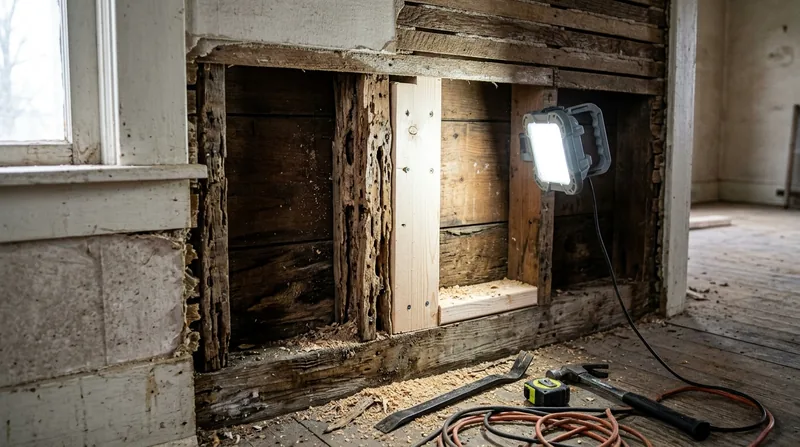




Eugene's oldest neighborhoods, from the Craftsman bungalows of the Jefferson Westside to the English cottages near the university and the post-and-beam homes climbing the South Hills, sit over vented crawlspaces where the long rainy season keeps wood damp for months. Carpenter ants and Pacific dampwood termites thrive in that wet wood, while subterranean termites work their way into old sill plates. Once a pest inspection confirms the damage, termite damage repair in Eugene means replacing the eaten studs, joists, sills and trim to restore full structural integrity. We work from your pest inspection report, remove and replace the damaged wood, and leave you with solid framing ready for whatever comes next. This guide explains what termite damage looks like in Eugene homes, how we approach the repair, what it costs, and what to expect from start to finish.
Why Termite Damage Repair Matters in Eugene's Wet Climate
Eugene's mild, wet winters create ideal conditions for wood-eating insects. The Willamette Valley floor sits on heavy clay soil that holds water, and the forested hills bring moisture from dense tree cover. Crawlspace humidity softens the rim joists and sill plates of homes built in the 1920s through 1960s, and once termites or carpenter ants establish themselves, they move silently through the wood frame for years before an inspection catches them. Damage left unrepaired spreads deeper into the structure, weakens floor joists, and eventually reaches load-bearing walls and beam connections. The cost of repair grows with delay, and the risk to the home's stability increases.
- Carpenter ants tunnel through soft, wet wood in rim joists and studs, leaving galleries that weaken the frame.
- Pacific dampwood termites prefer the wet heartwood of old Douglas fir beams and sill plates in crawlspaces.
- Subterranean termites build mud tubes from soil into old sills and can damage structural wood if moisture is present.
- Early detection through a professional pest inspection stops the spread and keeps repair costs manageable.
- Structural damage left unaddressed can eventually compromise floor level, door operation and wall integrity.
Addressing termite damage promptly protects the value of your home and prevents far costlier structural repairs down the line.
Key info: Eugene's rainy climate means crawlspace humidity is a year-round condition. Homes in Coburg, Springfield and Cottage Grove face the same risk. A pest inspection report is your roadmap for repair work, and we follow it precisely to replace only the damaged wood and leave the sound wood in place.
For more on related wood damage, see our guide to wood rot and dry rot repair in Eugene. If you need to check local building code requirements for your repair, the City of Eugene's building department is the authoritative source.
How We Repair Termite Damage: Step-by-Step Process
Termite damage repair starts with your pest inspection report, which shows exactly where the insects have fed and how much wood has been compromised. We assess each damaged member, determine whether it can be reinforced or must be replaced, and plan the repair in phases that keep the home safe and functional throughout. For sill plates and rim joists, we often sister new pressure-treated lumber alongside the sound wood, securing it with bolts and blocking to restore load capacity. For studs, trim and subfloor sections, we remove and replace the damaged pieces, scribing new wood to fit the existing frame and finish. Beam and joist damage requires careful temporary support during removal and installation of new framing members.
- We obtain and review your completed pest inspection report to identify all damaged wood members.
- We assess each damaged area to determine if the wood can be reinforced with sistering or must be fully replaced.
- We plan the work in phases, using temporary support where needed to maintain structural integrity during removal.
- We remove damaged wood carefully, exposing sound framing and preparing surfaces for new members.
- We install new lumber, matching species and grade where visible, pressure-treating sill and rim joists for longevity.
- We secure all new members with bolts, nails and blocking sized to the original load requirements.
The result is a fully repaired frame that meets current code and will last as long as the original wood if moisture is managed going forward.
Example: A 1940s English cottage in the Friendly area had subterranean termite damage in the sill plate where the rim joist met the stem wall. We sistered new pressure-treated 2x10 lumber to the sound portion of the existing sill, bolted it at 4-foot intervals, and installed new blocking under the floor joists. The floor level came back true, and the repaired sill is now good for another 80 years.
For structural questions about load-bearing walls or beams, see beam replacement and load-bearing wall removal. For floor joist and subfloor damage, consult floor joist and subfloor repair.
Repair Methods and Approaches
| Approach | Description | Best for |
|---|---|---|
| Sistering | New lumber bolted alongside the damaged member to share the load and reinforce the frame. | Sill plates, rim joists and floor joists where the sound wood is sufficient to carry half the load. |
| Full Replacement | Removal of the entire damaged member and installation of new lumber sized to the original specifications. | Studs, headers, beams and joists where damage is extensive or the wood is too soft to reinforce. |
| Patch and Seal | Removal of localized damage and installation of new wood sections, often used for trim, fascia and non-structural members. | Exterior trim, soffit, fascia and finish carpentry where structural load is minimal. |
| Temporary Support and Staged Removal | Installation of temporary posts and beams to carry the load while damaged structural members are removed and replaced. | Load-bearing walls, beams and large floor joist sections where the home must remain occupied during repair. |
Termite Damage Repair Cost in Eugene: What to Expect
Termite damage repair in Eugene typically starts at $1,200 for small, localized damage to trim, sills or a single joist section. Most repairs in the $2,500 to $5,000 range involve sistering sill plates, replacing a few floor joists or removing and replacing damaged studs in a wall section. Larger jobs, such as replacing an entire rim joist system or repairing load-bearing beams, often run $6,000 to $12,000 or more depending on the extent of the damage, the complexity of temporary support, and whether a permit is required. The final cost depends on the area of damage, the wood species and grade needed for repair, the accessibility of the damaged framing, and whether the work requires temporary structural support.
Get estimates from at least two or three local carpenters so you can compare approach, pricing and timeline. A detailed pest inspection report will help contractors give you accurate numbers. For a full pricing overview and to discuss your specific situation, visit our pricing page or request a free estimate.
Termite Damage Repair Near Me: What Eugene Homeowners Should Know When Hiring a Carpenter
When you are ready to hire a carpenter for termite damage repair in Eugene or nearby areas like Springfield, Veneta and Creswell, focus on getting a contractor who takes time to understand the damage, explains the repair method clearly and provides a detailed estimate in writing. Ask to see proof of insurance coverage and check references from recent jobs. Understand whether your repair requires a permit, especially if you live in a historic district or have an HOA that oversees exterior or structural work. A good contractor will explain when a permit is needed and will help you understand the process, though the final determination rests with your local building department.
The difference between a solid repair and a poor one often shows up years later when floors remain level, doors close smoothly and the frame holds firm through the rainy season. For a free consultation and estimate, call (541) 636-9499 or contact us online.
Termite Damage Repair in Eugene: Pricing Guide
| Service | Price | Details |
|---|---|---|
| Small localized termite damage (trim, fascia, single joist) | Starting at $1,200 | Removal and replacement of damaged trim, soffit or single joist section, includes new lumber and fastening. |
| Sill plate or rim joist sistering | Starting at $2,500 | Sistering new pressure-treated lumber to damaged sill or rim joist, bolted and blocked, typical crawlspace job. |
| Multiple joist replacement or wall stud repair | Starting at $4,500 | Removal and replacement of multiple floor joists or several studs in a wall section, includes temporary support if needed. |
| Large-scale structural repair (beam, entire rim joist, load-bearing wall) | On estimate | Extensive damage requiring temporary support, engineered sizing consultation, and permit coordination requires site assessment. |
| Travel and site visit | Included | No separate fee for travel within Eugene and surrounding service areas including Springfield, Cottage Grove and Coburg. |
| Free estimate | Free | Detailed written estimate provided within 24 hours of site visit, no obligation to book, call (541) 636-9499. |
Indicative pricing, the exact cost depends on square footage, finish, and site access. Free personalized estimate within 24h at (541) 636-9499.


