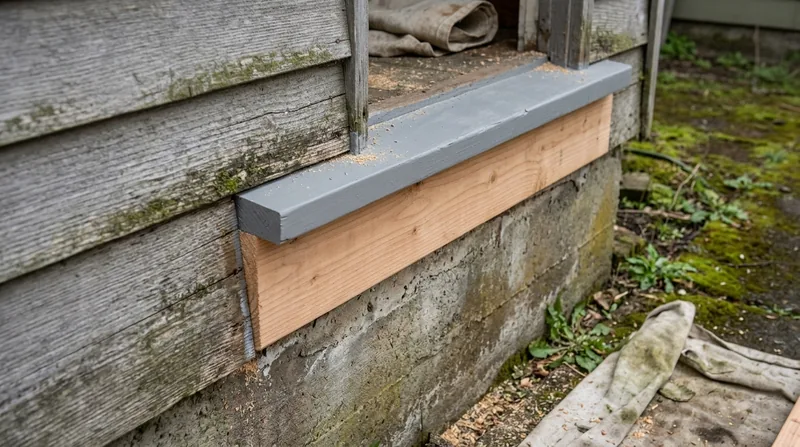




Wood rot and dry rot repair in Eugene is one of the most common carpentry jobs we do, and for good reason: the city's long rainy season, mossy shade, and damp crawlspaces create perfect conditions for wood decay on Craftsman bungalows, cedar-sided ranches, and T1-11 split-levels across the Jefferson Westside, Whiteaker, Friendly, and South Hills. Unlike a cosmetic patch or paint-over, we cut out decayed wood completely, treat the surrounding framing, and rebuild with rot-resistant lumber. The result is a permanent repair that stops the decay and restores structural integrity without replacing sound wood unnecessarily.
Why Wood Rot Repair Matters in Eugene's Wet Climate
Eugene sits on heavy clay soil in the Willamette Valley floor and on steeper forested lots in the South Hills, with a climate that keeps wood damp for months. Moss and algae hold water on roof edges and deck surfaces. Crawlspaces stay humid year-round, softening sill plates and joist ends. When decay starts, it spreads quietly through framing, floor joists, and exterior trim until the structural damage becomes visible and expensive. Catching rot early and removing only the decayed wood saves money and preserves the original framing wherever it is sound.
- Sill plates and rim joists decay first because they sit closest to damp crawlspace air and contact moisture from the foundation.
- Exterior siding and trim rot when water pools behind cladding or when gutters fail to shed rain away from the wall.
- Floor joists soften and sag when subfloor moisture rises from below, especially in older post-and-pier homes with vented crawlspaces.
- Fascia and soffit boards rot from the inside out as rain runs behind gutters and condensation forms in unvented eaves.
- We remove only the decayed wood, treat the surrounding framing with a wood hardener, and rebuild with pressure-treated lumber or naturally rot-resistant species.
A structural repair stops the decay and restores load-bearing capacity without the cost and disruption of full replacement.
Key info: In Eugene's Craftsman bungalows and older cottages, sill plate rot is the most common failure mode. The City of Eugene building code requires that any structural repair be inspected by the local building department if the work affects a load-bearing member. Contact the Eugene Building and Permit Services at (541) 682-5086 for guidance on whether your repair needs a permit. For more on termite damage in the same zones, see our termite damage repair service.
How We Repair Wood Rot: Our Process
We start with a careful inspection to map the extent of decay, probe the wood to find the boundary between sound and soft framing, and identify what caused the moisture problem in the first place. Once we understand the scope, we remove all decayed wood, treat the healthy framing around it, and rebuild using materials matched to the original species and grade. The goal is to restore function and appearance without unnecessary replacement, and to address the moisture source so the repair lasts.
- We inspect the affected area and probe with a moisture meter and awl to identify all soft, decayed wood.
- We remove decayed wood in clean cuts, staying just beyond the decay line and leaving all sound framing intact.
- We treat exposed wood with a wood hardener and allow it to cure before rebuilding.
- We rebuild using pressure-treated lumber, naturally rot-resistant species, or a combination matched to the original construction.
- We address the moisture source, whether that means improving drainage, rerouting gutters, or increasing crawlspace ventilation.
- We finish the repair with caulk, paint, or stain to match the existing surface and protect the new wood from weathering.
The entire process is driven by what the wood tells us, not by a preset template.
Local example: A 1920s English cottage in the Friendly neighborhood near the University of Oregon had rot in the bottom 18 inches of its cedar siding on the north wall, where gutters had overflowed for years and water pooled at the base. We cut out the decayed cedar boards and the rim joist behind them, treated the exposed framing, and rebuilt with new cedar cladding and treated lumber. We also rerouted the gutters and added a small drain. The repair cost less than half what a full siding replacement would have, and the wall is now structurally sound and weather-tight. For similar structural work, see our page on floor joist and subfloor repair.
Wood Rot Repair Methods: Repair vs. Replace
| Approach | Description | Best for |
|---|---|---|
| Localized removal and rebuild | Cut out decayed section, treat surrounding wood, rebuild with new lumber or matching species. | Rot confined to one area (sill, trim, joist end) with sound framing nearby. |
| Sistering and reinforcement | Bolt a new joist or header alongside a weakened beam or floor member to restore load capacity without full replacement. | Structural members with partial decay where the original wood is still load-bearing. |
| Full member replacement | Remove and replace an entire joist, beam, sill plate, or structural element when decay is too extensive to repair. | Decay that spans more than half the depth or length of a load-bearing member. |
| Moisture control and prevention | Improve drainage, reroute gutters, increase crawlspace ventilation, or add vapor barriers to stop future decay. | All repairs, as the root cause of rot is moisture. Prevention is always part of the solution. |
Wood Rot and Dry Rot Repair Cost in Eugene: What to Expect
A typical wood rot repair in Eugene starts at around $650 for a small, accessible area like a damaged trim board or a short section of sill plate. The cost rises with the extent of decay, the difficulty of access, the species of wood being replaced, and whether the repair is on a foundation sill or high up on a gable. Getting a free, no-obligation estimate from us lets you understand exactly what you are looking at before you commit.
Factors that move the price up include:
- Decay that runs along multiple joists or spans a long section of sill plate costs more because we must remove and rebuild more wood.
- Difficult access, such as rot under a deck or inside a crawlspace, adds labor time and may require temporary bracing or staging.
- Structural repairs that require a load-bearing member to be sistered or replaced need careful planning and often a permit from the City of Eugene.
- Matching the original wood species, such as old-growth Douglas fir or cedar, may add material cost compared to pressure-treated lumber.
- Addressing the moisture source, whether rerouting gutters, improving drainage, or adding ventilation, is part of the repair and factors into the total scope.
We recommend getting 2 to 3 estimates so you can compare approach, materials, and price. A good estimate will explain what wood is being removed, why, and what will replace it, not just a dollar figure. See our full pricing page for more detail on how we structure estimates and what you can expect to pay for different scales of work.
Wood Rot and Dry Rot Repair Near Me: What Eugene Homeowners Should Know When Hiring a Carpenter
Finding a carpenter who understands wood decay and can explain repair versus replacement clearly is crucial. Look for someone who will spend time on site, probe the wood to understand the full extent of decay, and propose a realistic plan before quoting a price. Ask about their experience with the specific failure mode you are facing (sill plate rot, siding decay, joist softening) and whether they have references from other Eugene homeowners they can share.
When you are evaluating contractors, ask these questions:
- Will you provide a free estimate and explain what wood is decayed and why before giving a price.
- Are you fully insured and can you provide a certificate of insurance upon request.
- Do you have references from other homeowners in Eugene, Springfield, or Cottage Grove who have had similar repairs done.
- If this is a structural repair affecting a load-bearing wall or floor system, do you understand the permit requirements and will you work with the building department.
- Will you address the moisture source that caused the decay in the first place, or only remove and replace the wood.
We are a local carpentry shop, not a franchise. The same carpenters who inspect your home do the work. We explain what we find, propose repair first when the wood justifies it, and build to last. Contact us for a free estimate at (541) 636-9499. We respond within 24 hours and can often schedule an inspection within a few days.
Wood Rot & Dry Rot Repair in Eugene: Pricing Guide
| Service | Price | Details |
|---|---|---|
| Small rot repair (trim, fascia, or short sill section) | Starting at $650 | Includes removal of decayed wood, treatment of surrounding framing, and rebuild with matching material and finish |
| Medium repair (multiple joists or long sill run) | Starting at $1,400 | Covers more extensive decay removal, treatment, rebuild, and addressing the moisture source causing the rot |
| Structural repair (sistering or full member replacement) | Starting at $2,500 | Includes temporary bracing, member replacement or reinforcement, possible permit coordination, and moisture control |
| Complex or large-scale job | On estimate | Decay affecting multiple systems or structural members requires an on-site inspection to scope properly and price accurately |
| Travel | Included | No separate call-out or mileage fee for estimates and work within Eugene and surrounding service areas |
| Estimate | Free | Response within 24 hours at (541) 636-9499, no obligation to book, detailed explanation of findings included |
Indicative pricing, the exact cost depends on square footage, finish, and site access. Free personalized estimate within 24h at (541) 636-9499.


