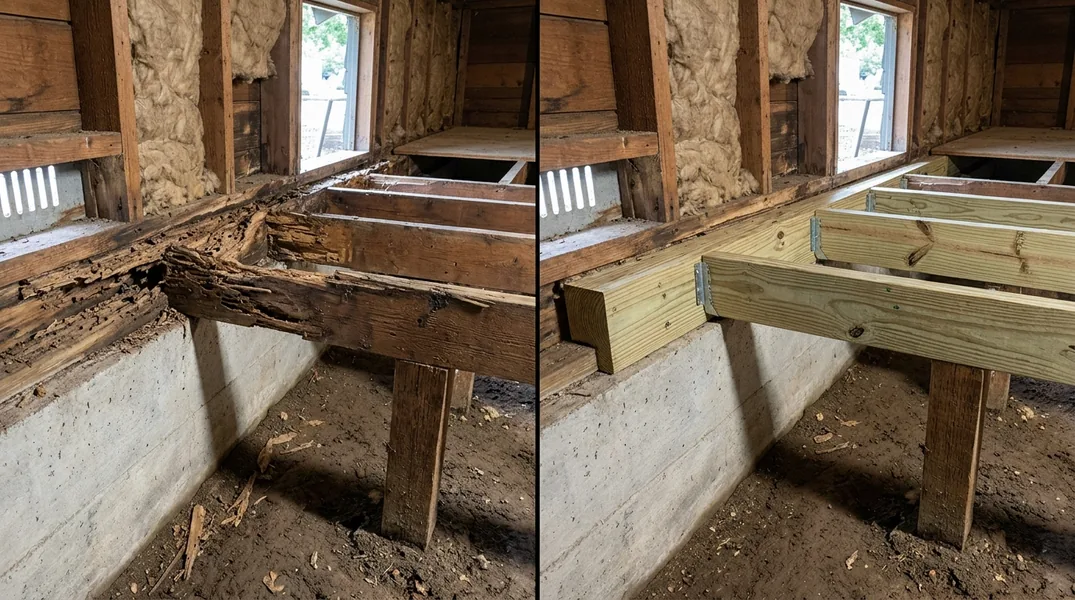
Why Identifying Wood Damage Matters in Eugene Homes
Homeowners in Eugene face a particular challenge when it comes to wood-damaging pests and decay. Our region's wet climate and older housing stock create ideal conditions for dry rot, carpenter ants, and dampwood termites to thrive. The problem is that all three cause wood damage that can look similar at first glance, yet each requires a different treatment approach.
Misidentifying the culprit behind your wood damage can lead to wasted money on ineffective treatments or, worse, allow the problem to worsen while you're addressing the wrong issue. A homeowner who treats for termites when they actually have dry rot won't solve the underlying moisture problem that's feeding the decay. Similarly, applying termite treatments to carpenter ant damage won't eliminate the structural threat. That's why learning to distinguish between these three common wood destroyers is essential before you call in a professional for Wood Rot & Dry Rot Repair or Termite Damage Repair.
What Does Dry Rot Look Like and How Does It Damage Wood?
Dry rot is a fungal infection that thrives in damp wood, despite its misleading name. The fungus breaks down the cellulose in wood fibers, turning solid lumber into a crumbly, brittle material that crumbles easily in your hand. If you press a screwdriver or awl into affected wood, it will sink in like the wood is spongy or soft. The wood often takes on a dark brown or grayish appearance, and you may notice deep cracks running across the grain in a cube-like pattern, which is one of the most telltale signs of dry rot damage.
One of the most distinctive features of dry rot is the presence of fungal fruiting bodies, which look like pancake-shaped growths or crusty patches on the wood surface or nearby areas. These can appear white, gray, or reddish-brown. Unlike termite or carpenter ant damage, dry rot doesn't leave behind sawdust or frass (insect droppings). Instead, you'll find only the crumbly, deteriorated wood itself. Dry rot typically appears in areas where moisture has been trapped for an extended period, such as around foundation sills, under bathroom fixtures, in crawl spaces, or anywhere water has leaked and wood hasn't dried properly.
The real danger with dry rot is that it can spread rapidly through wood and even across materials like mortar and concrete if conditions remain moist. In Eugene, where humidity levels stay high throughout much of the year, dry rot is a serious concern for homeowners. If you suspect dry rot, addressing it quickly is critical, as the fungus will continue to consume the structural integrity of your home. Getting a professional assessment and repair plan is your best defense against catastrophic structural failure.
Carpenter Ant Damage vs. Termite Damage: Key Differences
Carpenter ants and termites both tunnel through wood, but they do it in fundamentally different ways. Carpenter ants are large black or reddish-black insects that excavate galleries inside wood to create nesting sites, but they don't eat the wood itself. Instead, they remove the wood to make room for their colonies. When you find carpenter ant damage, the galleries are typically smooth and clean, almost like they've been sanded. You'll often find piles of fine sawdust (called frass) near the damaged areas, which looks like coarse sand or tiny wood shavings. This sawdust is actually the waste material the ants have pushed out of their tunnels as they work.
Termites, on the other hand, actually consume the cellulose in wood as a food source. Subterranean termites build mud tubes to travel between their nests in the soil and the wood they're eating. Dampwood termites, which are common in moist climates like Eugene, live directly in the wood and don't need mud tubes. Termite damage creates galleries that are typically rougher and more jagged than carpenter ant tunnels, and the wood is often stained or discolored along the tunnels. Termites leave behind fecal pellets that are much smaller and more uniform than carpenter ant frass, resembling fine sand or pepper.
A key difference in carpenter ant damage vs. termite damage is the sound and activity patterns. Carpenter ants are nocturnal and make noise as they work, so you might hear rustling or tapping sounds in your walls at night. Termites are quieter but more relentless, working around the clock to consume wood. If you see winged insects swarming, that's often a sign of termites preparing to establish new colonies. Carpenter ants will also forage for food outside the nest, so you might spot them in your kitchen or trailing along baseboards.
Dampwood Termite Damage: What Makes It Different
Dampwood termites are particularly problematic in the Pacific Northwest because they thrive in high-moisture environments and don't require ground contact like subterranean termites do. They nest directly in wood that has elevated moisture content, making them especially dangerous in older homes with poor drainage, leaky roofs, or inadequate ventilation. Dampwood termite damage often appears in attics, crawl spaces, and areas around plumbing or roof leaks where wood stays consistently damp.
The wood damaged by dampwood termites typically appears hollowed out with galleries that follow the grain of the wood. You may notice the wood becoming soft or spongy, which can be confused with dry rot at first glance. However, dampwood termite damage usually lacks the deep cube-like cracks that characterize dry rot. Instead, the damage tends to be more linear, following the wood grain. You may also spot termite droppings, which are small, hard pellets that accumulate in piles near damaged areas. Unlike carpenter ants, dampwood termites don't produce the coarse sawdust piles that are so obvious to homeowners.
Another telling sign of dampwood termite damage is the presence of the termites themselves or their wings. Dampwood termites are larger than subterranean termites and can be up to half an inch long. If you see large, winged insects around your home in late summer or fall, dampwood termites may be swarming. The challenge with dampwood termite damage is that by the time it becomes visible, the colony may have been active for months or even years, causing significant structural compromise. Early detection and professional Termite Damage Repair are essential to prevent further deterioration.
How to Inspect Your Home: A Practical Checklist
Start your inspection in the areas most vulnerable to moisture and wood damage. Check your basement or crawl space, looking for soft spots in rim joists, sill plates, and subfloor areas. Shine a flashlight and use a screwdriver to gently probe the wood, watching for it to sink in easily or crumble. Look for the telltale signs of each threat: cube-like cracks and fungal growth for dry rot, clean galleries with piles of fine sawdust for carpenter ants, and rougher galleries with termite droppings for termites.
Examine areas around plumbing penetrations, under bathroom fixtures, and anywhere you've noticed water stains or discoloration. Check your attic for roof leaks and inspect roof decking and rafters. Look along the foundation perimeter and under decks or porches, as these areas often trap moisture. Don't forget to inspect window frames, door frames, and any exterior wood that's been exposed to weather. Pay special attention to areas where wood contacts soil or concrete, as these are high-risk zones for all three types of damage.
If your inspection reveals suspicious areas but you're not certain what you're dealing with, take photos and reach out to Eugene Carpentry for a professional assessment. Early identification can save thousands of dollars in repairs and prevent safety hazards. Call (541) 636-9499 or visit our website to request a free estimate and expert consultation.
When to Call a Professional for Wood Damage Repair Near Me
While a homeowner can spot the signs of wood damage, determining the exact cause and the full extent of the problem requires professional expertise. A trained carpenter or wood damage specialist will not only identify whether you're dealing with dry rot, carpenter ants, or termites, but will also assess how deep the damage extends and whether structural elements like Floor Joist & Subfloor Repair or even Beam Replacement & Load-Bearing Wall Removal may be necessary.
The cost of addressing wood damage early is far less than the cost of dealing with structural failure later. If you've identified any signs of wood damage in your home, don't wait. Contact Eugene Carpentry today at (541) 636-9499 to schedule your inspection. Our team has years of experience identifying and repairing all types of wood damage in homes throughout the region, and we'll provide you with a clear diagnosis and honest pricing for the work needed to restore your home's structural integrity.
Looking for a professional carpentry contractor in Eugene? Eugene Carpentry responds fast for all your carpentry needs.
Get a Free QuoteOur services: Wood Rot & Dry Rot Repair · Termite Damage Repair · Floor Joist & Subfloor Repair