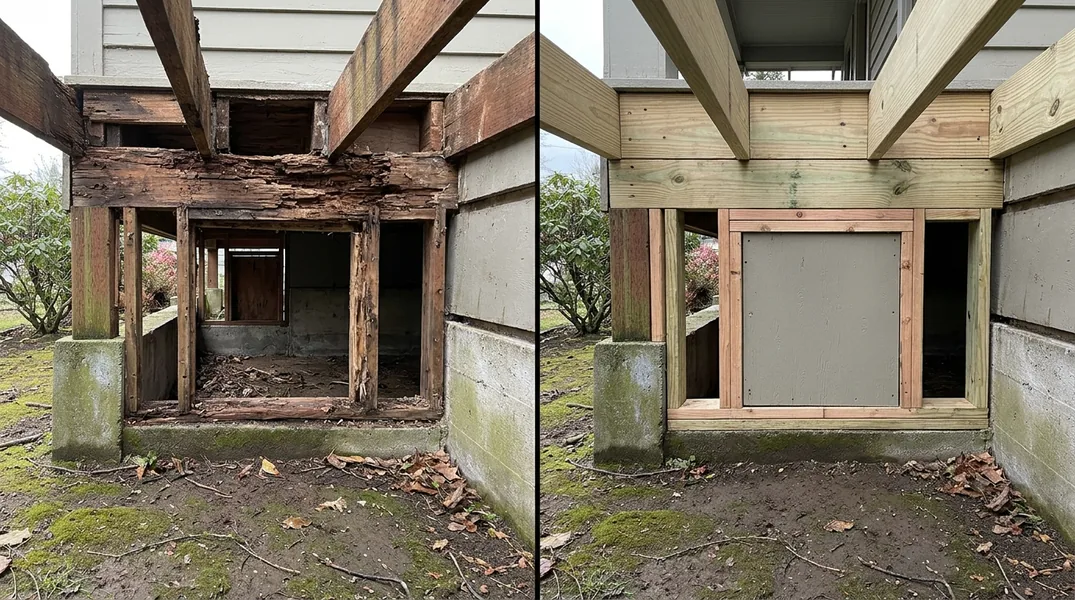
Why Westside Bungalows and South Hills Mid-Century Homes Are Vulnerable to Wood Damage
If you own a craftsman bungalow on Eugene's Westside or a mid-century home tucked into the South Hills, you already know you've got something special. These homes have character, solid bones, and architectural details that new construction simply can't replicate. But that charm comes with a responsibility: understanding the unique vulnerabilities of older wood construction.
Homes built between 1900 and 1970 were constructed with materials and methods that made sense for their era. Many feature extensive use of cedar siding, wooden window frames, exposed beam ceilings, and wood-frame foundations that are beautiful but require vigilant maintenance. Eugene's wet climate, with its cool temperatures and consistent moisture, creates ideal conditions for wood rot and dry rot to take hold. Unlike newer homes with synthetic materials and modern moisture barriers, older homes weren't designed with today's understanding of water management. This doesn't mean your home is doomed, but it does mean you need a proactive maintenance strategy.
Understanding Wood Rot vs. Dry Rot in Historic Homes
Homeowners often use the terms interchangeably, but wood rot and dry rot are actually different problems requiring different solutions. Wood Rot & Dry Rot Repair starts with understanding what you're dealing with. Wood rot, technically called wet rot, occurs when wood remains consistently damp and fungal spores break down the cellulose structure. You'll typically see soft, spongy wood that feels wet to the touch. It's most common in areas with poor drainage, leaking gutters, or inadequate ventilation. Dry rot, despite its name, also requires moisture to develop, but it can spread through wood that appears dry to the naked eye. Dry rot is particularly insidious because it can travel through masonry and hidden spaces, making it harder to detect until significant damage has occurred.
In craftsman bungalows and mid-century homes, both types are common problems. Bungalows often have low-pitched roofs and deep eaves that can trap moisture, while mid-century homes frequently feature large roof overhangs and wooden soffits that are vulnerable to water intrusion. The difference between the two matters because dry rot requires more aggressive intervention and may indicate a hidden moisture problem that needs to be addressed throughout the structure. If you suspect either type of rot in your home, getting a professional assessment is crucial before damage spreads to structural elements.
Cedar Siding Repair: Preserving Your Home's Exterior Character
Cedar siding is iconic on Eugene historic homes, and for good reason. It's beautiful, naturally insulating, and ages gracefully when maintained properly. However, cedar is also susceptible to rot when exposed to moisture without proper protection. Many homeowners assume that because cedar is naturally rot-resistant, it requires minimal care. This is a dangerous misconception. Cedar siding needs regular maintenance to remain healthy, particularly in the Pacific Northwest's damp climate.
The key to cedar siding longevity is understanding how moisture infiltrates. Water can enter through cracks in the wood, gaps between boards, failed caulk joints, and anywhere siding meets trim or roofing. Once moisture gets behind the siding, it can sit for months before visible damage appears. By then, the damage often extends to the sheathing and framing underneath. Preventative maintenance involves regular inspection, timely caulking and sealing, and addressing any signs of discoloration or soft spots immediately. If you notice dark staining, soft wood that yields to pressure, or areas where paint is peeling, these are warning signs that moisture has compromised the wood. Professional cedar siding repair involves removing damaged sections, treating the underlying structure, and replacing with matching cedar when necessary. This isn't a project for DIY enthusiasm; improper repair can trap moisture and accelerate future damage.
The Foundation Problem: When Wood Rot Affects Structural Integrity
One of the most serious wood damage scenarios in older homes involves foundation-level issues. Many craftsman bungalows and South Hills mid-century homes have wooden sill plates, rim joists, and floor systems that sit close to grade or in contact with concrete foundations. These critical structural elements are constantly exposed to ground moisture, making them prime targets for rot. When rot develops in these areas, it's not just an aesthetic problem or a localized repair. It threatens the entire structural integrity of your home.
Floor Joist & Subfloor Repair becomes necessary when rot has compromised these load-bearing elements. You might notice soft or bouncy floors, doors that won't close properly, or visible gaps between the house and foundation. These symptoms indicate that the structural system is failing. The good news is that modern repair techniques can address these problems without requiring a complete foundation overhaul. However, this work requires engineering assessment and professional execution. Attempting to repair rotted floor joists or sill plates without proper support can cause catastrophic failure. Similarly, if rot has affected load-bearing walls or support beams, Beam Replacement & Load-Bearing Wall Removal may be required, work that absolutely demands professional expertise and proper permitting.
Historic Home Maintenance: Your Year-Round Prevention Checklist
Prevention is always more cost-effective than repair, and this is especially true with wood rot. Developing a maintenance routine specific to your home's age and construction style will extend the life of your wood elements and catch problems early. Start with your roof and gutters. Clogged gutters are one of the leading causes of water infiltration in older homes. Clean gutters at least twice yearly, more often if you have overhanging trees. Check that downspouts extend at least four to six feet away from your foundation and that water is draining properly. Look for missing or damaged shingles, gaps in flashing, and signs of water staining on interior ceilings and walls.
Next, inspect your exterior wood regularly. Walk around your home in good daylight and look for signs of water damage, paint failure, caulk deterioration, and soft wood. Pay special attention to areas where different materials meet, such as where siding meets trim, windows, doors, and the foundation. These transitions are where water loves to hide. Check your basement or crawlspace for standing water, high humidity, or visible mold. If you have a crawlspace, ensure it's properly ventilated and that there's adequate clearance between soil and wooden structural elements. Interior inspections matter too. Look for water stains on ceilings and walls, musty odors, and any visible signs of moisture. If you notice these issues, don't wait for the problem to worsen. Getting a free estimate from a professional can clarify whether you're dealing with a simple maintenance issue or something more serious.
When to Call a Professional: Wood Rot & Dry Rot Repair Near Me
Knowing when to tackle a project yourself versus when to call a professional is critical. Minor surface damage to cedar siding, such as small cracks or areas of paint failure, might be addressed with caulking and repainting. However, if you notice soft wood, significant discoloration, or damage that extends more than a few inches, professional assessment is warranted. The challenge with wood rot is that visible damage is often just the tip of the iceberg. What looks like a localized problem on the surface may extend deep into the structure, affecting areas you can't see. This is why professionals use moisture meters and probing techniques to assess the true extent of damage before recommending repairs.
Eugene Carpentry serves homeowners throughout Eugene and surrounding areas with specialized expertise in older home repair. If you're seeing signs of wood damage, experiencing soft floors, noticing water stains, or simply want a professional assessment of your historic home's condition, reaching out is the smart move. You can call (541) 636-9499 or visit the website to discuss your concerns. Professional assessment typically includes a thorough inspection, moisture testing, and a clear explanation of what's happening and what options exist for repair. Understanding the pricing upfront helps you budget appropriately and make informed decisions about your home's maintenance.
Looking for a professional carpentry contractor in Eugene? Eugene Carpentry responds fast for all your carpentry needs.
Get a Free QuoteOur services: Wood Rot & Dry Rot Repair · Termite Damage Repair · Floor Joist & Subfloor Repair