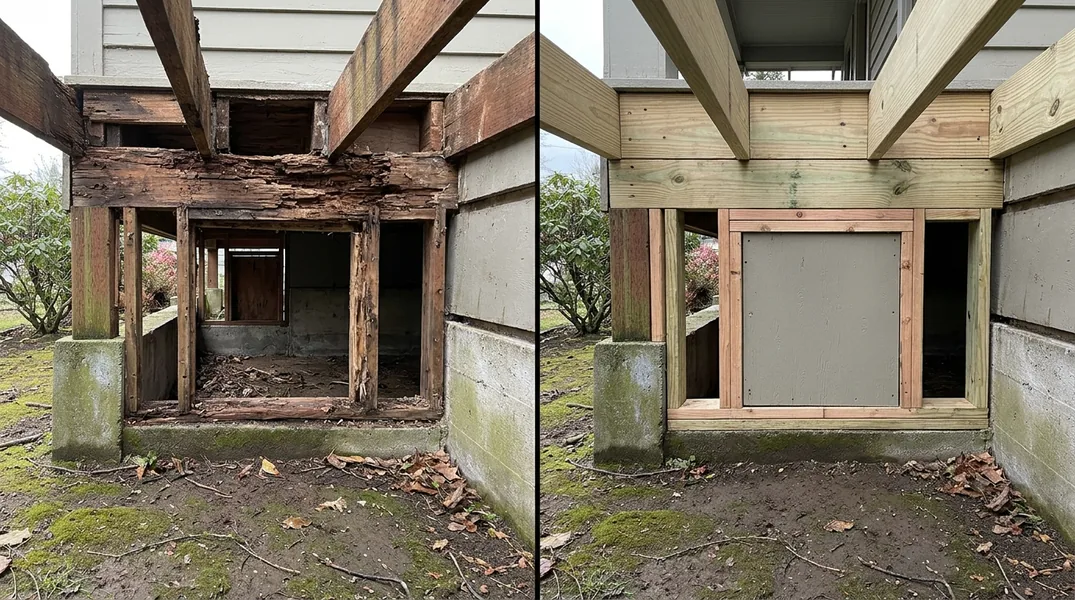
Understanding Wood Rot and Insect Damage
Wood rot and termite damage are two of the most common structural problems homeowners face, yet they're often misunderstood. Wood rot occurs when moisture penetrates wood fibers and fungi begin breaking down the cellulose, weakening the structural integrity of beams, siding, and subfloors. Termite damage, on the other hand, results from active insect infestation that hollows out wood from the inside out. Both conditions can lead to serious safety issues if left unaddressed, but they require different approaches to remediation.
The key difference between these two problems affects how you'll approach repair or replacement. Dry rot and wet rot are both fungal issues that thrive in damp conditions, while Termite Damage Repair requires not only structural fixes but also pest elimination and prevention strategies. Understanding which problem you're facing is the first step toward making the right repair decision. Many homeowners in Eugene discover these issues only after noticing soft spots, discoloration, or visible insect activity, which is why early detection matters so much.
When Can You Repair Rotted Wood Without Replacing It?
The good news is that not every instance of wood rot requires full replacement. If you catch the problem early and the rot is superficial, Wood Rot & Dry Rot Repair can often be accomplished through targeted repair rather than complete replacement. Superficial rot typically affects only the outer layers of wood and hasn't yet compromised the structural load-bearing capacity. In these cases, a skilled carpenter can remove the affected wood, treat the underlying moisture problem, and rebuild the damaged area with epoxy fillers or new wood patches that blend seamlessly with the original structure.
Repair without replacement is most feasible when the rot affects less than 30 percent of a structural member's cross-section and the damage is localized to one area. For example, a window sill or door frame with surface-level rot can often be saved through careful removal of the damaged wood, application of wood hardener, and patching with exterior-grade filler. However, this approach requires that the moisture source has been identified and eliminated. If water continues to penetrate the area, the rot will simply return, making the repair a temporary band-aid rather than a lasting solution. The key is addressing both the symptom and the cause.
Signs That Full Replacement Is Necessary
There are situations where repair simply isn't viable, and full replacement becomes the only safe option. If wood rot has penetrated deeply into a structural member like a beam, floor joist, or load-bearing wall, the wood has lost its ability to safely carry loads. You might notice that wood crumbles or crushes easily when you press on it, or that it has a spongy texture. These are signs that the fungal damage has destroyed the wood's cellular structure too thoroughly to repair. Additionally, if rot affects more than 30 percent of a beam's cross-section or extends along more than a third of its length, replacement is necessary to maintain structural safety.
Floor Joist & Subfloor Repair often requires replacement rather than repair, especially when multiple joists are affected or when the damage is discovered in load-bearing areas. Similarly, if Termite Damage Repair reveals extensive hollowing or tunneling throughout a structural member, replacement is the only way to restore safety and prevent future collapse. In Eugene, where moisture from rain and humidity can accelerate wood decay, structural members in basements, crawl spaces, and under sinks are particularly vulnerable to extensive damage that demands replacement.
Wood Rot & Dry Rot Repair Cost in Eugene: What to Budget
The pricing for wood rot repair varies dramatically depending on whether you're repairing a small section or replacing an entire structural member. Superficial repairs to siding, trim, or window frames typically range from $300 to $1,500, depending on the extent of the damage and the materials involved. These repairs are relatively straightforward and can often be completed in a day or two. However, if you need to address rot in structural components like floor joists or beams, costs can escalate quickly to $2,000 to $10,000 or more per affected member.
Full replacement of rotted wood is more expensive than repair but provides peace of mind and long-term durability. A single floor joist replacement might cost $800 to $2,500, while replacing multiple joists or addressing Beam Replacement & Load-Bearing Wall Removal can run $5,000 to $25,000 depending on the scope. These costs reflect the complexity of the work, the need for temporary support structures, and the materials required. The longer you wait to address wood rot, the more extensive and expensive the repairs become. What might have been a $500 repair today could become a $5,000 replacement in a few years if the rot continues spreading. If you're concerned about wood rot in your home, reach out to Eugene Carpentry at (541) 636-9499 to get a free estimate and understand your options.
The Moisture Problem: Fixing the Root Cause
Whether you choose repair or replacement, addressing the moisture source is absolutely critical. Wood rot cannot exist without moisture, so if you don't eliminate the water intrusion, the problem will recur. Common moisture sources include roof leaks, poor drainage around the foundation, plumbing leaks, inadequate ventilation in crawl spaces, and water splashing against the base of exterior walls. Before any repair work begins, a thorough inspection should identify where water is entering and how it's reaching the wood.
Fixing the moisture problem might involve installing gutters and downspouts, grading soil away from the foundation, repairing roof leaks, improving ventilation, or installing vapor barriers in crawl spaces. These preventative measures are just as important as the actual wood repair. Many homeowners find that investing in moisture control saves them thousands of dollars in future repairs. In humid climates like Eugene, maintaining proper ventilation and managing water runoff are essential to keeping wood structures healthy and rot-free.
Making the Repair Versus Replace Decision
Deciding whether to repair or replace comes down to three main factors: the extent of the damage, the structural importance of the affected member, and your long-term goals for the property. A professional carpenter can assess these factors and provide honest guidance about which option makes sense in your specific situation. If the damage is minor and localized, repair is often the most cost-effective choice. If the damage is extensive or affects critical structural components, replacement is safer and ultimately more economical because it eliminates the risk of future failure.
The decision also depends on how long you plan to stay in your home and how much you're willing to invest in maintenance. If you're planning to sell soon, addressing wood rot thoroughly through replacement might add value and give buyers confidence in the home's structural integrity. If you're staying long-term, a combination of repair for minor issues and replacement for structural damage offers the best balance of cost and durability. Eugene Carpentry has years of experience helping homeowners in the area make these decisions. Contact us at (541) 636-9499 or request a free estimate to discuss your specific situation and get a clear recommendation based on your home's needs.
Looking for a professional carpentry contractor in Eugene? Eugene Carpentry responds fast for all your carpentry needs.
Get a Free QuoteOur services: Wood Rot & Dry Rot Repair · Termite Damage Repair · Floor Joist & Subfloor Repair