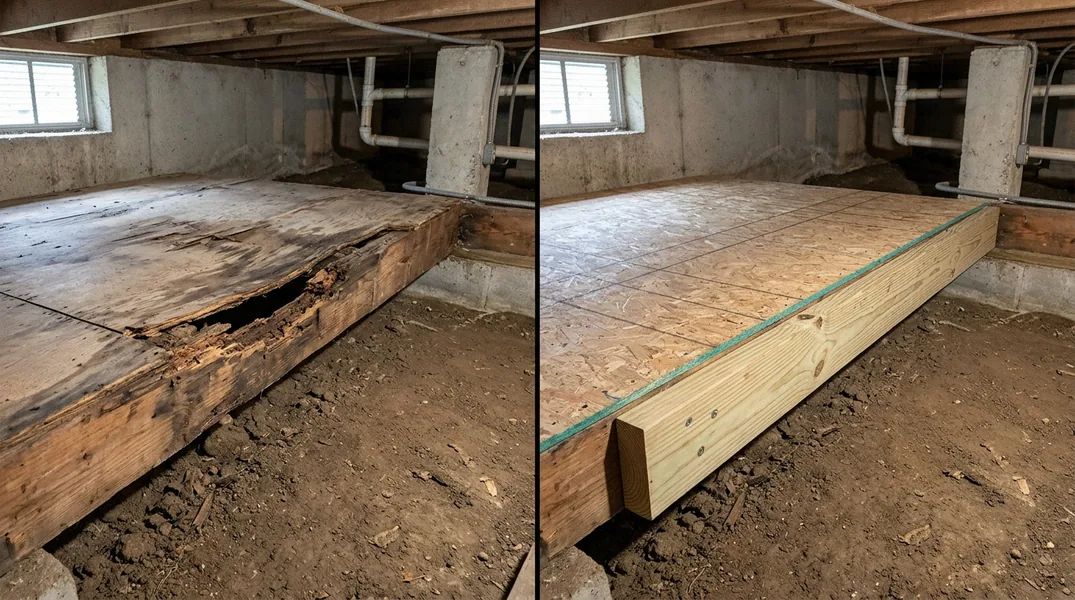
Why Crawlspace Joists Fail: The Root Causes of Sagging Floors
A sagging floor is one of the most unsettling discoveries a homeowner can make. That soft, bouncy feeling underfoot or the visible dip running across your living room isn't just a cosmetic problem, it's a structural warning sign. In Eugene, where our climate brings plenty of moisture and older homes feature crawlspaces as standard, sagging floors are surprisingly common.
The culprit is almost always deteriorating floor joists. These horizontal beams, typically 2x8 or 2x10 lumber, span the width of your crawlspace and support everything above them. When they weaken, the floor sags. The most common reason joists fail in our region is Wood Rot & Dry Rot Repair. Crawlspaces are naturally damp environments, and without proper ventilation or moisture control, wood absorbs water and begins to decay. Dry rot fungus thrives in this environment, literally eating away at the wood's structural integrity from the inside out. What makes dry rot particularly insidious is that it can progress silently for years before you notice the floor sagging.
Beyond rot, Termite Damage Repair is another significant threat to crawlspace joists in Eugene. Subterranean termites tunnel through wood, creating hollow galleries that compromise load-bearing capacity. Older crawlspaces with poor drainage or standing water are especially vulnerable. Additionally, undersized joists (common in homes built before modern building codes), settling foundations, and inadequate support posts can all contribute to sagging over time.
Recognizing the Signs: When Your Floor is Telling You Something
Homeowners often ask: at what point should I worry about my sagging floor? The honest answer is that any noticeable sag warrants investigation. Early warning signs include a slight bounce or flex when you walk across certain areas, a visible dip when you look across the floor from a low angle, or doors and windows that stick or don't close properly. These symptoms indicate that the floor structure is already compromised enough to affect how the rest of your house sits.
If you've noticed these issues, don't delay. The longer a sagging floor goes unrepaired, the more stress is placed on surrounding structures. Walls can crack, windows can break, and the damage spreads to other joists and beams. The good news is that a professional inspection can identify exactly what's happening beneath your home. Eugene Carpentry recommends getting a free estimate if you suspect joist problems. A trained carpenter can assess moisture levels, identify rot or pest damage, and determine whether the joists can be repaired or need replacement.
Repair Options: From Sistering Joists to Full Replacement
Floor Joist & Subfloor Repair comes in several forms, depending on the extent of damage and the condition of the existing joists. The most common and cost-effective method is sistering, which involves fastening a new, sound piece of lumber alongside a damaged joist. This technique works well when the joist is partially compromised but still has some structural value. The new sister joist shares the load, gradually taking on more weight as the original joist continues to deteriorate. Sistering floor joists is a proven method that can extend the life of your crawlspace structure and eliminate the sag without a complete rebuild.
For more severe cases, where joists are heavily rotted or termite-damaged, full joist replacement is necessary. This involves removing the damaged joist entirely and installing new pressure-treated lumber of the same dimensions. The process requires proper temporary support (usually adjustable posts or beams) to hold up the floor while work is underway. It's more labor-intensive and costly than sistering, but it's the only solution when structural integrity has been significantly compromised.
In some situations, the underlying problem isn't just the joists themselves. If your crawlspace has poor drainage, high humidity, or inadequate ventilation, those issues must be addressed alongside joist repair. Otherwise, new wood will rot just as quickly as the old. This might involve installing a vapor barrier, improving drainage, or adding ventilation fans. Beam Replacement & Load-Bearing Wall Removal may also be necessary if support beams have failed or if your home's structural layout needs updating to properly support the floor system.
Sagging Floor Repair Cost in Eugene: What to Budget
The pricing for sagging floor repair varies widely depending on the scope of work. Sistering a few joists in a small area might cost between $1,500 and $3,500, while replacing multiple heavily damaged joists can run $5,000 to $15,000 or more. Several factors influence the final bill: the number of joists affected, the extent of rot or damage, how accessible the crawlspace is, and whether additional work like moisture control or beam repair is needed.
Labor typically represents the largest portion of the cost. Crawlspace work is physically demanding and often uncomfortable, requiring workers to operate in tight, dusty, or damp conditions. Material costs depend on the grade and type of lumber used. Pressure-treated joists cost more than standard lumber but offer better rot resistance, making them a worthwhile investment for crawlspace applications. If your home requires temporary support systems during repair, that adds to the cost as well.
The best way to understand what you'll actually spend is to get a detailed assessment from Eugene Carpentry. Call (541) 636-9499 or visit the website to schedule a consultation. A professional inspection will reveal exactly what needs to be done, and you'll receive a transparent estimate before any work begins. Investing in repairs now, even if the upfront cost seems significant, is far cheaper than ignoring the problem and dealing with foundation damage, structural failure, or a home that becomes difficult to sell.
Prevention: Keeping Your Crawlspace Healthy
The best approach to sagging floors is prevention. If your crawlspace is currently in good condition, protecting it now will save thousands in repair costs later. Start with moisture management. Crawlspaces should ideally maintain humidity levels below 60 percent. Installing a vapor barrier on the ground and ensuring proper drainage around your foundation goes a long way toward keeping moisture out. If your home doesn't have adequate ventilation, consider adding foundation vents or a mechanical ventilation system.
Regular inspections are equally important. Many homeowners never venture into their crawlspaces, which means problems develop unnoticed for years. Schedule an annual or bi-annual crawlspace inspection, especially if you live in an older home or in an area with high groundwater. Look for signs of moisture, soft or discolored wood, sawdust piles (a sign of termites), or visible mold. Catching these issues early, before they affect the structural joists, makes repairs much simpler and less expensive.
If you're concerned about your crawlspace or have noticed any signs of sagging, don't wait. Contact Eugene Carpentry at (541) 636-9499 for a professional evaluation. Our team has the expertise to diagnose the problem accurately and recommend the right solution for your home.
Why Professional Repair Matters for Your Home's Foundation
DIY crawlspace work might seem tempting when you see the repair costs, but floor joist repair is not a suitable project for most homeowners. Crawlspaces are confined, often poorly lit, and potentially hazardous. More importantly, incorrect joist repair can create new structural problems that are even more expensive to fix. Improper sistering, inadequate fastening, or failure to address underlying moisture issues will lead to recurring problems and wasted money.
Professional carpenters bring experience, proper tools, and knowledge of building codes. They understand how to assess structural damage, calculate load requirements, and ensure repairs meet local standards. They also carry insurance, which protects you if something goes wrong during the work. When you hire Eugene Carpentry, you're investing in a permanent solution, not a temporary patch.
Your home is likely your largest asset. The foundation and floor system are critical to its safety and value. If you've noticed sagging floors or suspect crawlspace joist damage, reach out for a free estimate today. Eugene Carpentry serves homeowners throughout the region and is ready to help restore your floors to solid, level condition.
Looking for a professional carpentry contractor in Eugene? Eugene Carpentry responds fast for all your carpentry needs.
Get a Free QuoteOur services: Wood Rot & Dry Rot Repair · Termite Damage Repair · Floor Joist & Subfloor Repair