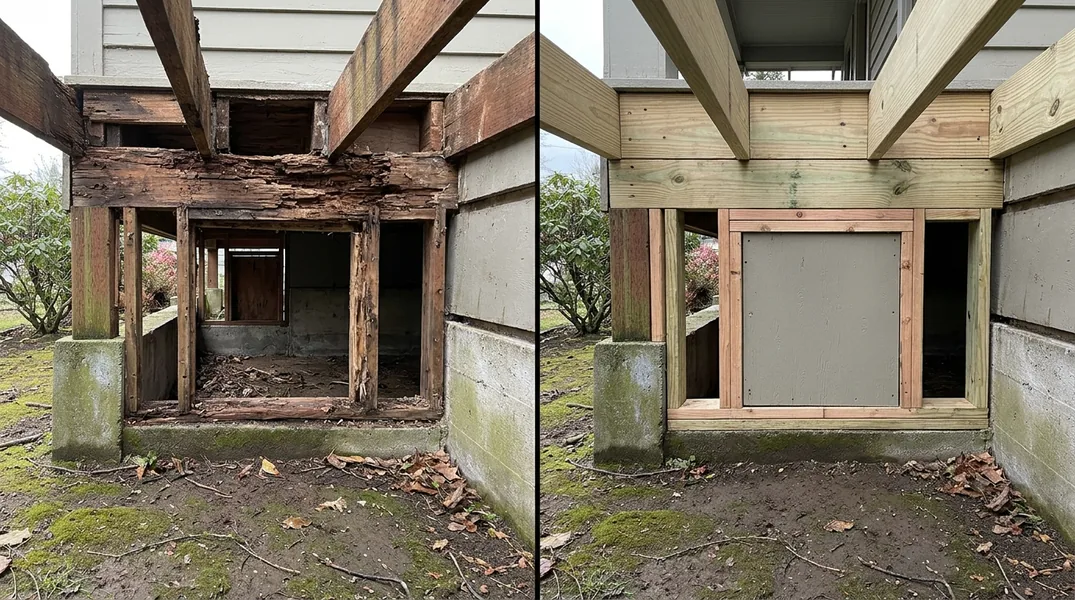
Why Eugene's Climate Makes Wood Rot Inevitable
Eugene sits in the Willamette Valley, one of the Pacific Northwest's most moisture-rich environments. Our region receives over 45 inches of rain annually, with much of it falling during the cooler months when wood dries slowly. This combination of persistent moisture and cool temperatures creates a perfect storm for wood decay. Unlike drier climates where wood problems develop slowly, homes in Eugene can experience significant structural damage within just a few years if moisture intrusion goes unaddressed.
The real culprit isn't just rainfall; it's how moisture gets trapped in and around your home. Crawlspaces, the most vulnerable zone in most Eugene-area homes, are essentially outdoor spaces that happen to be under your house. Without proper ventilation, vapor barriers, and drainage, crawlspace moisture damage accumulates steadily. Gutters that overflow, foundation cracks, and poor grading all channel water toward your foundation and into the spaces where your home's structural wood lives. Once wood stays damp for extended periods, the decay process begins almost immediately.
Understanding the Two Main Threats: Wood Rot and Carpenter Ants
When homeowners talk about wood damage, they often lump everything together, but wood rot and wood rot repair issues are distinct from carpenter ant damage, even though both thrive in our climate. Wood rot is caused by fungi that consume the cellulose in wood fibers. The process begins when wood moisture content exceeds 20 percent, which happens constantly in Eugene's environment. Dry rot, a particularly aggressive form, can spread through wood and even across masonry, making it especially dangerous if left untreated.
Carpenter ants, by contrast, don't eat wood; they excavate it to create galleries for their colonies. A single carpenter ant colony can contain thousands of workers, and they prefer wood that's already been softened by moisture or fungal decay. This is why the two problems often occur together: carpenter ants are attracted to wood that's already beginning to rot. Distinguishing between the two requires a trained eye, but both demand urgent attention. If you're seeing signs of wood rot or suspect carpenter ant activity, professional inspection is your first step toward protecting your home's structural integrity.
Signs of Wood Rot: What Every Eugene Homeowner Should Know
Recognizing signs of wood rot early can save you thousands in repair costs. The most obvious indicator is soft or spongy wood, particularly in crawlspaces, around window frames, door jambs, and where wood meets the foundation. If you can press a screwdriver into wood and it sinks in easily, that's a red flag. Wood rot often appears as discoloration, ranging from light tan to dark brown or black, and the affected wood may feel lighter than it should. Sometimes you'll notice a musty, earthy odor in your crawlspace or basement, which indicates active fungal growth.
Don't ignore small signs. A small area of soft wood in a joist or rim board can expand rapidly in Eugene's moist climate. Carpenter ant damage shows up differently: you might see small piles of sawdust near wooden structural elements, or notice ants themselves during warmer months. Some homeowners discover damage only when they notice sagging floors or walls that are no longer plumb. By that point, the damage is often extensive. The best approach is to schedule a professional inspection if you suspect any wood damage. Eugene Carpentry can assess the extent of the problem and recommend whether you need floor joist and subfloor repair or more extensive structural work.
Crawlspace Moisture Damage: The Hidden Epidemic
Most Eugene homes built before the 1980s have crawlspaces with minimal or no moisture control. These spaces are dark, damp, and often inaccessible, making them ideal breeding grounds for fungal decay and insect infestations. Crawlspace moisture damage often goes unnoticed until it's severe because homeowners rarely venture into these areas. However, the damage happening there directly affects the structural integrity of your entire home. Your floor joists, rim boards, and support beams are all at risk when crawlspace conditions aren't managed.
The solution requires a multi-pronged approach. Proper grading around your foundation should direct water away from your home. A vapor barrier, ideally a thick polyethylene sheet, should cover at least 85 percent of the crawlspace floor. Ventilation, whether passive or active, helps control humidity levels. In severe cases, you might need a dehumidifier or a more comprehensive encapsulation system. If damage has already occurred, you may need floor joist and subfloor repair to restore structural stability. The key is acting before minor moisture issues become major structural failures.
Wood Rot & Dry Rot Repair Near Me: When to Call a Professional
If you've identified potential wood rot or carpenter ant damage in your home, attempting DIY repairs is rarely advisable. Structural wood damage requires precise assessment and professional-grade solutions. A contractor experienced in wood rot and dry rot repair will evaluate how far the damage extends, whether it affects load-bearing elements, and what repair strategy will restore your home's structural integrity. In some cases, affected wood can be treated and sealed. In others, damaged sections must be removed and replaced entirely.
The scope of work varies widely depending on the damage location and severity. Damage in a rim board might require localized repair, while extensive joist damage might necessitate beam replacement and load-bearing wall removal to ensure safety. Eugene Carpentry serves the entire Eugene area and can handle everything from minor rot repair to major structural restoration. The best first step is to get a free estimate so you understand exactly what you're dealing with and what repairs will cost.
Prevention Strategies: Protecting Your Home Long-Term
Once you've addressed active wood damage, preventing future problems becomes your priority. In Eugene's climate, prevention isn't optional; it's essential. Start with your exterior: ensure gutters and downspouts are clean and direct water at least 6 feet away from your foundation. Check caulking around windows and doors annually, and reseal as needed. Keep soil graded away from your foundation, and address any foundation cracks promptly. These simple steps prevent moisture from entering your home in the first place.
Inside your home, maintain good ventilation and control humidity levels. In crawlspaces, install and maintain proper vapor barriers and ensure adequate air circulation. Address any plumbing leaks immediately, as they're a major source of structural moisture. If you're planning renovations, consider upgrading to more moisture-resistant materials in vulnerable areas. Finally, schedule periodic professional inspections of your crawlspace and structural elements. Catching problems early, when repair costs are lowest, is far better than waiting for visible damage to appear. For a comprehensive assessment of your home's wood condition and a personalized prevention plan, contact Eugene Carpentry at (541) 636-9499 or request a free estimate today.
Looking for a professional carpentry contractor in Eugene? Eugene Carpentry responds fast for all your carpentry needs.
Get a Free QuoteOur services: Wood Rot & Dry Rot Repair · Termite Damage Repair · Floor Joist & Subfloor Repair